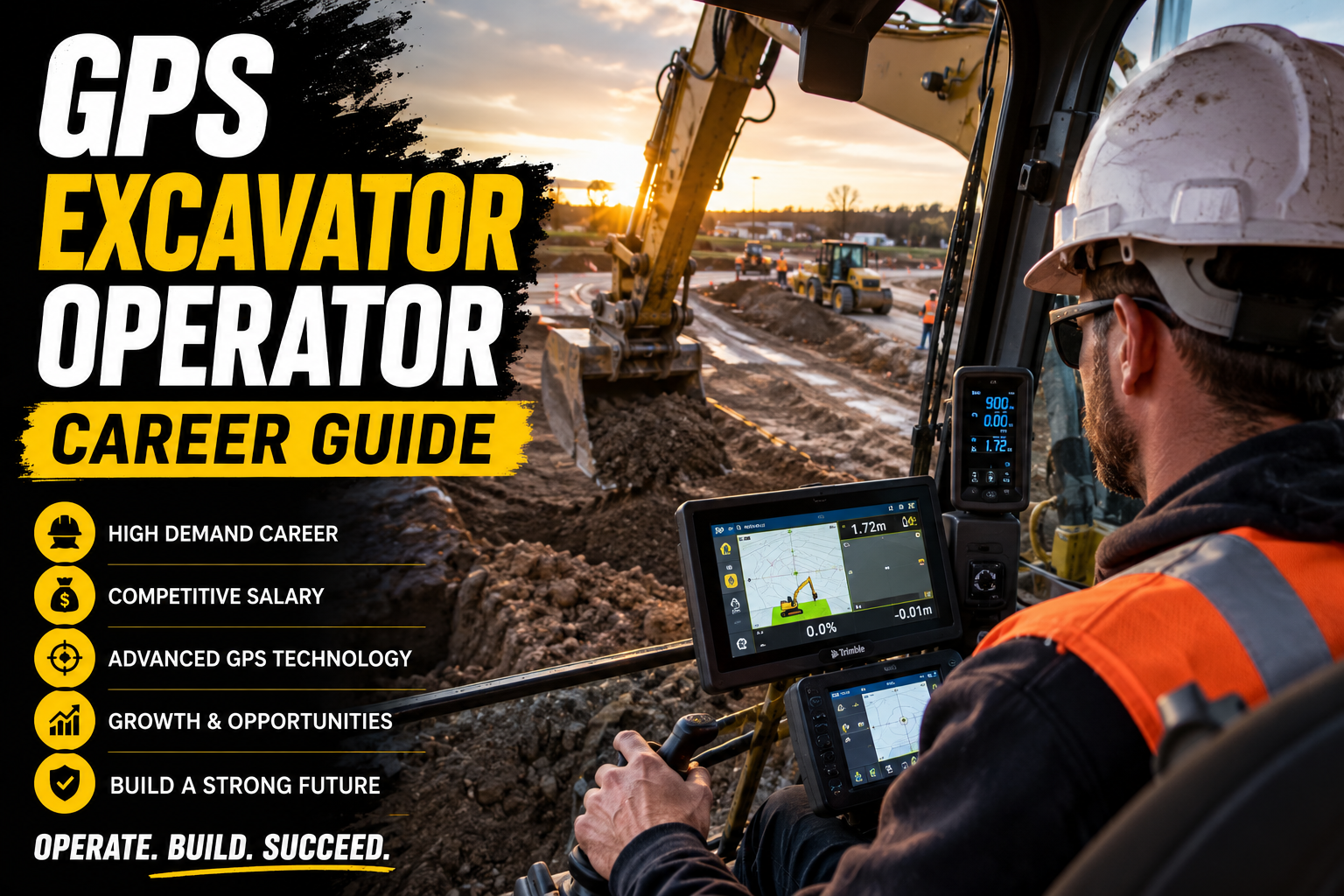
The construction and mining industries continue to drive demand for skilled heavy equipment operators across New Zealand. Among the most sought-after professionals are GPS Excavator Operators, who combine traditional machine operation skills with advanced technology to deliver precise and efficient earthmoving work.
From major infrastructure projects to large-scale mining operations, GPS-equipped excavators are transforming the way construction work is completed. As a result, operators with GPS machine control experience are highly valued and often earn above-average wages.
If you enjoy working with modern machinery, technology, and large-scale construction projects, becoming a GPS Excavator Operator could be an excellent career choice.
What Is a GPS Excavator Operator?
A GPS Excavator Operator is a skilled heavy equipment professional who operates excavators fitted with GPS machine control systems. These systems provide real-time positioning data, allowing operators to dig, grade, and shape land with exceptional accuracy.
GPS technology helps reduce errors, improve productivity, and minimize the need for manual measurements on construction sites.
GPS Excavator Operators commonly work on:
- Civil construction projects
- Road and highway developments
- Mining operations
- Drainage systems
- Infrastructure projects
- Residential subdivisions
- Commercial construction sites
- Earthmoving and land development projects
Why GPS Excavator Operators Are in High Demand
Modern construction projects require greater accuracy and efficiency than ever before. GPS machine control systems allow operators to work faster while maintaining precise specifications.
Companies increasingly seek operators who can:
- Use advanced GPS technology
- Read digital site plans
- Complete precision earthworks
- Improve project efficiency
- Reduce material waste
As infrastructure investment continues across New Zealand, demand for experienced GPS operators remains strong.
Key Responsibilities of a GPS Excavator Operator
Operating Excavators Safely and Efficiently
The primary responsibility is operating heavy machinery while maintaining safety, productivity, and accuracy.
Daily tasks may include:
- Excavation work
- Trenching operations
- Foundation digging
- Earthmoving projects
- Drainage installations
- Site preparation
Using GPS Machine Control Systems
Operators use advanced machine guidance technology to achieve precise excavation depths, grades, and alignments.
This technology helps eliminate guesswork and improves overall project accuracy.
Reading Plans and Site Information
GPS Excavator Operators must understand:
- Site plans
- Engineering drawings
- Grade information
- Survey data
- GPS mapping systems
The ability to interpret project specifications is essential for successful excavation work.
Completing Earthworks and Final Trim Work
Projects often require operators to perform:
- Bulk earthmoving
- Site leveling
- Trimming and grading
- Foundation preparation
- Utility trenching
- Drainage excavation
Equipment Inspection and Maintenance
Operators conduct daily machine inspections, including:
- Hydraulic systems
- Tracks and attachments
- Safety equipment
- Fluid levels
- GPS hardware and controls
Routine maintenance helps reduce downtime and improve productivity.
Working with Construction Teams
GPS Excavator Operators regularly coordinate with:
- Site supervisors
- Civil engineers
- Surveyors
- Ground crews
- Project managers
Strong communication helps ensure projects stay on schedule.
Essential Skills for Success
GPS Machine Control Expertise
Experience using GPS-guided excavation systems is one of the most valuable skills employers seek.
Heavy Machinery Operation
Operators must confidently control excavators in a variety of conditions and environments.
Attention to Detail
Precision is critical when working with foundations, drainage systems, and infrastructure projects.
Problem-Solving Skills
Construction sites often present changing conditions that require quick thinking and adaptability.
Health and Safety Awareness
Understanding workplace safety procedures helps protect both workers and equipment.
Teamwork and Communication
Successful operators collaborate effectively with crews, engineers, and supervisors.
Qualifications and Certifications
Most employers prefer candidates with:
- Proven excavator operating experience
- GPS machine control experience
- WTR (Wheels, Tracks, and Rollers) endorsements
- Class 2 driver’s licence
- Civil construction experience
- Site Safe certification (preferred)
- Strong understanding of workplace safety
Additional certifications can increase employment opportunities and earning potential.
Work Environment
GPS Excavator Operators work primarily outdoors in construction, mining, and infrastructure environments.
Common work settings include:
- Civil construction projects
- Mining sites
- Road construction projects
- Infrastructure developments
- Drainage and utility installations
- Earthmoving operations
The role often involves long hours, varying weather conditions, and physically demanding environments.
Salary Expectations in New Zealand
GPS Excavator Operators are among the higher-paid equipment operators due to their specialized skills.
Typical earnings include:
| Experience Level | Hourly Rate |
|---|---|
| Entry-Level Operator | NZD $30 – $35 |
| Experienced GPS Operator | NZD $38 – $45 |
| Senior/Specialized Operator | NZD $45+ |
Many employers also provide:
- Weekly pay
- Overtime opportunities
- Travel allowances
- Long-term project work
- Modern machinery
- Career development opportunities
Experienced operators working on mining and major infrastructure projects can often earn significantly more through overtime and project bonuses.
Career Growth Opportunities
GPS Excavator Operators can advance into several specialized roles.
Senior Plant Operator
Operating larger and more complex machinery across major projects.
Civil Construction Supervisor
Managing earthworks teams and site operations.
Site Foreman
Coordinating crews, equipment, and daily project activities.
Plant and Equipment Manager
Overseeing machinery fleets, maintenance schedules, and equipment logistics.
Construction Project Manager
With additional training and leadership experience, operators can move into project management roles.
Benefits of Becoming a GPS Excavator Operator
Many professionals choose this career because it combines technology, machinery, and strong earning potential.
Benefits include:
- Competitive hourly rates
- High demand for skilled operators
- Long-term project opportunities
- Overtime earning potential
- Modern GPS-equipped machinery
- Career advancement pathways
- Exposure to major infrastructure and mining projects
For individuals who enjoy operating heavy equipment and working with advanced technology, this profession offers excellent long-term prospects.
Submit Your Application
Conclusion
GPS Excavator Operators play a critical role in today’s construction and mining industries. By combining heavy equipment expertise with advanced GPS machine control technology, they help deliver projects safely, efficiently, and accurately.
With strong demand across New Zealand, competitive pay rates, and opportunities for career progression, GPS Excavator Operators can enjoy a stable and rewarding career. As technology continues to shape the construction sector, operators with GPS skills will remain highly valuable to employers across civil construction, infrastructure, and mining projects.
Frequently Asked Questions (FAQs)
What does a GPS Excavator Operator do?
A GPS Excavator Operator uses excavators equipped with GPS machine control systems to perform precise excavation, grading, trenching, and earthmoving work.
How much do GPS Excavator Operators earn in New Zealand?
Experienced GPS Excavator Operators typically earn between NZD $38 and $45+ per hour, depending on experience and project type.
What qualifications do I need?
Most employers look for excavator operating experience, WTR endorsements, a Class 2 licence, and GPS machine control experience.
Is GPS machine control difficult to learn?
While it requires training and practice, many experienced excavator operators quickly adapt to GPS technology and find it improves productivity and accuracy.
Are GPS Excavator Operators in demand?
Yes. Civil construction, mining, and infrastructure projects continue to increase demand for operators with GPS machine control skills.
What industries hire GPS Excavator Operators?
Construction, mining, roadworks, infrastructure development, utilities, drainage, and earthmoving companies regularly hire GPS operators.
Can I advance my career as an Excavator Operator?
Absolutely. Many operators progress into supervisory, management, training, and project coordination roles.